Common name: Common Sage, Garden Sage
Botanical name: Salvia officinalis L.
Family: Lamiaceae
Native region: Mediterranean
Plant part traditionally used: Leaves
Traditional herbal actions: Astringent, aromatic, carminative, antisudorific
Traditional energetics: Warming, drying, aromatic
Primary constituents: Volatile oils, phenolic acids, flavonoids, diterpenes
Traditional applications: Excessive perspiration, digestive discomfort, mouth and throat preparations, women's wellness
Important considerations: Thujone exposure, concentrated essential oil, seizure disorders, pregnancy, breastfeeding, medication interactions

Sage (Salvia officinalis)
There are certain herbs that seem to belong to the very heart of traditional herbal medicine, and sage is certainly one of them. Its soft, silvery-green leaves, distinctive fragrance, and long history of use make it one of the most recognizable plants in the traditional European apothecary. For centuries, sage has found a place in kitchen gardens, household remedies, and the writings of herbalists who valued it for far more than its culinary appeal.
I have always been drawn to herbs that bridge the worlds of nourishment and medicine. There is something particularly meaningful about a plant that can season a meal, grow beautifully in a garden, and hold such an enduring place in the history of botanical healing. Sage reminds us that traditional herbalism was never entirely separate from everyday living. The same plants that nourished families were often the ones they turned to for comfort and support.
For women navigating menopause, sage is especially interesting because of its traditional association with excessive perspiration, including the troublesome night sweats and episodes of heat that can accompany hormonal changes. But to appreciate sage fully, we need to look beyond its reputation as an herb for hot flashes and explore the plant itself, its traditional actions, its energetic qualities, and the ways herbalists have understood its place in individualized care.
Getting to Know Sage
Common sage, botanically known as Salvia officinalis, is a perennial, aromatic member of the Lamiaceae family, the same botanical family that includes rosemary, thyme, lavender, peppermint, and lemon balm. Native to the Mediterranean region, sage thrives in sunny, well-drained environments and is recognized by its softly textured, gray-green leaves and beautiful violet-blue flowers.
Its botanical name offers a glimpse into its long medicinal history. The genus Salvia is associated with the Latin word salvare, meaning “to save” or “to heal,” while officinalis historically identifies plants recognized for medicinal use in traditional apothecaries. Together, these names reflect the importance sage held in European herbal traditions.
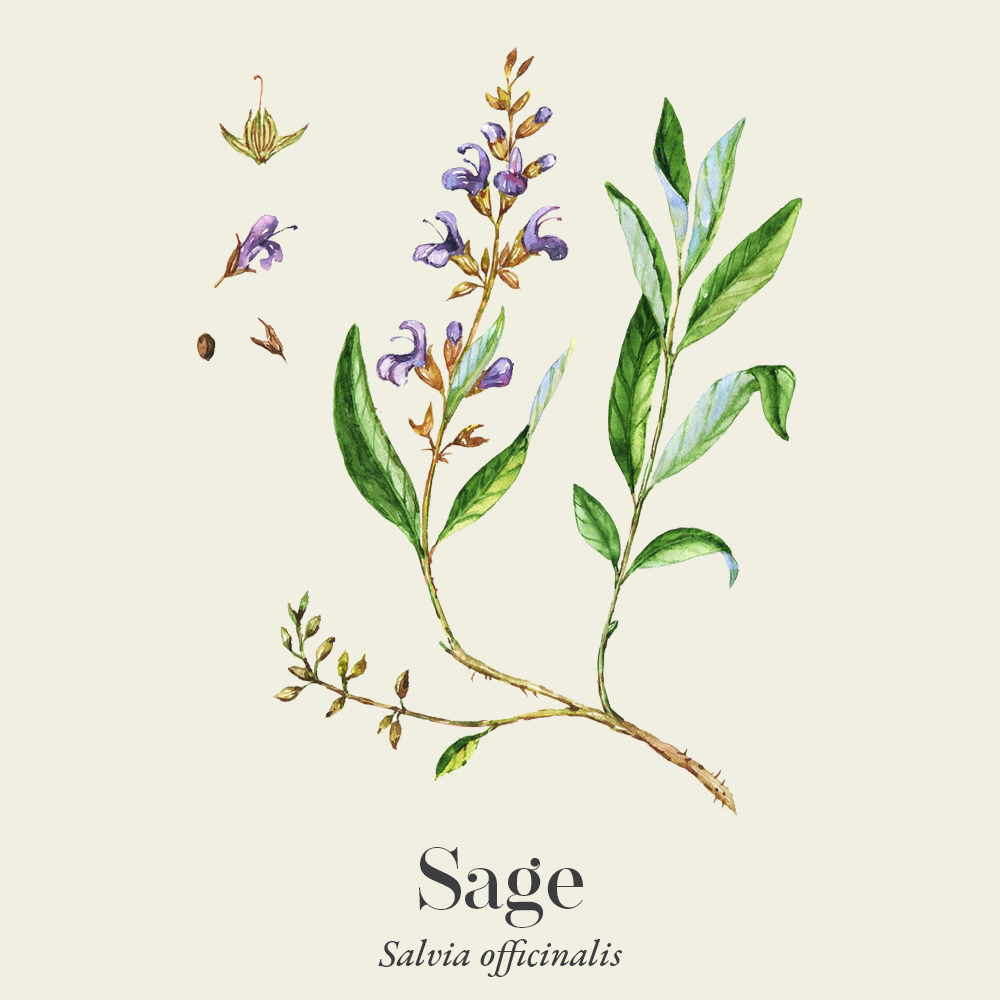
Although many plants are commonly called sage, not all belong to the same species or share the same chemical composition. Garden sage, Salvia officinalis, should not be confused with clary sage (Salvia sclarea), white sage (Salvia apiana), or other plants carrying the same common name. In clinical herbalism, accurate botanical identification is essential because traditional uses, constituents, and safety considerations can differ considerably between species.
The leaves are the primary medicinal part of common sage. They may be used fresh or dried, most often in infusions, tinctures, and other herbal preparations. Their unmistakable aroma comes from volatile oils produced within the plant, while their characteristic astringency reflects the presence of tannins and other polyphenolic compounds.
Sage in Traditional Western Herbalism
Sage has been valued in European herbal medicine since antiquity. Greek and Roman writers described its medicinal qualities, and the plant later became a familiar presence in medieval monastery gardens and household herb collections.
One traditional saying, often associated with medieval herbal lore, asks why a person should die while sage grows in the garden. Although certainly not a literal statement of its powers, the expression illustrates the extraordinary esteem in which the plant was held.
Historically, herbalists employed sage for a variety of concerns, including digestive discomfort, excessive perspiration, sore throats, and conditions involving excessive moisture or secretions. Its aromatic and astringent qualities made it particularly interesting to practitioners working within the traditional framework of herbal energetics.
In women's herbal traditions, sage became associated with menopausal perspiration and the discomfort of sudden episodes of heat. Its historical use is especially notable because it reflects an understanding of menopause that extended beyond the reproductive system. Traditional herbalists observed the effects of this transition on temperature regulation, digestion, sleep, and general well-being.
This is one of the aspects of traditional Western herbalism I appreciate most. The practitioner is encouraged to observe the person as a whole rather than simply identify a symptom and select a corresponding remedy.
Understanding Sage Through Herbal Energetics
Traditional Western herbalism describes plants not only by their physiological actions but also by their energetic qualities. These descriptions provide a framework for understanding how an herb may influence different constitutional and tissue-state patterns.
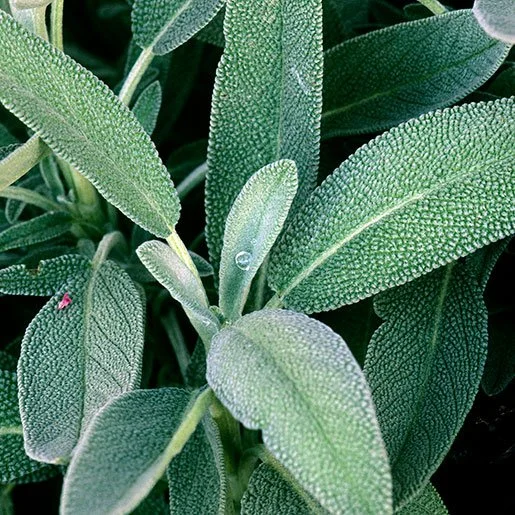
Sage is commonly characterized as warming, drying, aromatic, and astringent, although individual herbal traditions may describe aspects of its energetics somewhat differently.
Its drying quality is especially relevant to its traditional use for excessive perspiration. In herbal energetics, a drying herb may be considered when excessive moisture or secretions are prominent. Sage's astringent action is associated with its ability to produce a tightening effect on tissues, while its aromatic qualities reflect the presence of volatile compounds that contribute to its distinctive fragrance and traditional digestive applications.
This does not mean sage is automatically appropriate for every woman experiencing night sweats.
Consider two women who both experience menopausal perspiration. One may have frequent episodes of sweating while otherwise tending toward a moist constitution. Another may experience night sweats alongside pronounced dry mouth, dry skin, constipation, and vaginal dryness. Although both women share a similar symptom, their overall tissue patterns are different.
A traditional herbalist would consider whether the drying qualities of sage are appropriate within the broader constitutional picture, rather than selecting it solely because night sweats are present.
This distinction is central to individualized herbal practice. The goal is not simply to suppress an uncomfortable experience, but to understand the larger pattern and choose an approach that respects the woman's overall needs.
Sage and Menopausal Hot Flashes
One of sage's best-known contemporary applications is its use for menopausal hot flashes and excessive sweating.
Hot flashes, sometimes called vasomotor symptoms, are associated with changes in the body's temperature-regulating mechanisms during the menopausal transition. Fluctuating and declining estrogen levels can affect the hypothalamic pathways involved in thermoregulation, making some women more sensitive to small changes in body temperature.
The result may be sudden sensations of heat, flushing, perspiration, and, in some cases, subsequent chills. When these episodes occur at night, they can interrupt sleep and contribute to daytime fatigue.
Traditional European herbalists have long used sage for excessive perspiration, and this historical application has encouraged contemporary researchers to investigate whether sage preparations may be useful for menopausal vasomotor symptoms.
A small open-label study published in 2011 examined a fresh sage preparation in menopausal women experiencing hot flashes. Participants reported reductions in hot-flash frequency and severity during the study period. The findings were encouraging, but because the study did not include a placebo control group, it could not establish that sage itself was responsible for the improvements.
Other small clinical investigations have explored sage preparations for menopausal complaints, with some reporting beneficial effects. However, studies have differed in their formulations, methods, and outcomes, and the overall evidence remains limited.
For this reason, I consider sage a traditional botanical with some preliminary clinical support for menopausal perspiration, rather than an established treatment for hot flashes.
This distinction matters. Traditional experience can help us identify plants worthy of consideration, while contemporary research helps us evaluate how confidently we can recommend particular uses.
The Phytochemistry of Sage
One of the fascinating aspects of botanical medicine is the complexity of the plants themselves. Unlike preparations containing a single isolated compound, whole herbs contain numerous constituents that may contribute to their biological activity.
Sage contains several important groups of phytochemicals, including volatile oils, phenolic acids, flavonoids, and diterpenes.
Its volatile oil contains compounds such as 1,8-cineole, camphor, and thujone, although the proportions vary according to plant variety, growing conditions, harvest, and preparation method. These compounds contribute to sage's characteristic aroma and some of its biological properties.
Sage also contains rosmarinic acid, a polyphenolic compound found in several members of the mint family. Rosmarinic acid has attracted research interest because of its antioxidant and anti-inflammatory activities in laboratory studies.
Other constituents, including carnosic acid and related diterpenes, have also been investigated for their biological effects.
It is important to remember that activity observed in a laboratory does not automatically translate into a demonstrated benefit in humans. The concentration of a compound, its absorption, metabolism, and the preparation used all influence its potential effects.
The chemistry of sage also explains why preparation matters so much. An ordinary culinary serving, a cup of sage tea, a standardized extract, and concentrated sage essential oil are not equivalent products. They can differ substantially in constituent concentrations and safety profiles.
Traditional Preparation of Sage
In traditional Western herbal practice, sage leaves have been prepared in several ways depending on the intended use.
An herbal infusion is one of the simplest and most familiar preparations. Dried sage leaves are steeped in hot water, allowing water-soluble constituents and some aromatic compounds to enter the liquid. The resulting tea has a distinctive, somewhat bitter, aromatic flavor that many people recognize from culinary sage.
Sage has also been used in tinctures, which are hydroalcoholic extracts prepared to capture a different range of plant constituents. Commercial sage products may include liquid extracts, capsules, or preparations standardized for particular compounds.
These forms should not be assumed interchangeable. A preparation investigated in a clinical study may differ significantly from a homemade infusion in its chemistry, concentration, and effects.
I also enjoy considering sage through the lens of Mediterranean culinary tradition. Its leaves pair beautifully with olive oil, white beans, poultry, roasted vegetables, and other familiar foods. Culinary use offers a simple way to appreciate the plant's flavor and botanical character without treating every meal as a medicinal intervention.
For women interested in using sage specifically for menopausal symptoms, the appropriate preparation and amount should be considered in relation to their health history, medications, and individual circumstances.
Safety and Considerations
Sage has a long history of culinary use and is generally well tolerated in ordinary food quantities. Medicinal use, particularly in concentrated preparations or over extended periods, requires more careful consideration.
Common sage contains thujone, a naturally occurring constituent of its volatile oil. High exposures to thujone can be neurotoxic and may provoke seizures. The amount present varies considerably between preparations, which is one reason concentrated sage essential oil should not be taken internally as a home remedy.
Women with seizure disorders should be especially cautious with medicinal sage preparations. Pregnancy and breastfeeding also warrant avoidance of medicinal doses unless a qualified professional determines that a particular preparation is appropriate.
Sage has traditionally been associated with reducing lactation, although the clinical evidence for this use is limited.
Women taking prescription medications, particularly those affecting blood glucose or the nervous system, should have potential interactions reviewed before using concentrated sage preparations. Evidence for some proposed interactions is limited, but the possibility deserves attention.
It is also important not to assume that every episode of excessive sweating is caused by menopause. New, unexplained, or unusual sweating patterns may have other causes that deserve investigation.
For these reasons, I distinguish between enjoying sage as a culinary herb and using it as a concentrated medicinal preparation. The latter deserves individualized assessment.
Sage Within a Whole-Person Approach to Menopause
Although sage is often discussed in connection with hot flashes, I believe its greatest educational value lies in what it teaches us about the traditional herbal approach.
Menopause is not a single symptom or an isolated hormonal event. It is a significant physiological transition that can influence sleep, digestion, body composition, emotional well-being, and daily comfort. Each woman's experience is shaped by her individual health history, constitution, lifestyle, and circumstances.
When I work with women through Bella Zen, I am interested in understanding this larger picture.
How is she sleeping? Does she tend toward dryness or excess moisture? How is her digestion functioning? What is her overall energy like? Are stress and disrupted rest contributing to her discomfort? What medications or supplements is she using? What forms of nourishment, movement, and restoration are realistically available to her?
These questions help guide a thoughtful wellness strategy.
Sometimes an herbal preparation may be appropriate. Sometimes the more meaningful starting point is improving sleep routines, supporting digestion, exploring Mediterranean nourishment, or introducing gentle restorative movement. Often, several approaches can complement one another.
Sage reminds us that traditional herbalism is not simply the practice of matching herbs to symptoms. It is the art of observing patterns, understanding plants, and considering how botanical support may fit into the life of a particular person.
Bringing Sage Into the Modern Apothecary
I love that sage remains both an ordinary garden plant and a subject of serious botanical study. It connects the practical wisdom of traditional households with the curiosity of modern phytochemistry and clinical research.
Its long history of use for perspiration, digestion, and women's wellness makes it a fitting first plant for the Menopause Herbarium. Yet its story also reminds us why careful botanical identification, appropriate preparation, constitutional assessment, and safety considerations matter.
There is still much to learn about sage and its potential applications during menopause. Research continues to explore botanical preparations and their effects, while traditional herbal knowledge offers valuable historical context for understanding why certain plants have remained important across generations.
For me, this is part of the beauty of herbalism. We can honor the knowledge of those who came before us while continuing to ask thoughtful questions and refine our understanding.
And sometimes, the most familiar plants have the most interesting stories to tell.
If you're interested in exploring how traditional Western herbalism may fit into your own menopause wellness journey, I invite you to learn more about my personalized herbal consultations and continue exploring the Menopause Herbarium.
Selected References and Further Reading
Bommer, S., Klein, P., & Suter, A. (2011). First time proof of sage's tolerability and efficacy in menopausal women with hot flushes. Advances in Therapy, 28, 490–500.
European Medicines Agency, Committee on Herbal Medicinal Products. European Union Herbal Monograph on Salvia officinalis L., folium.
European Medicines Agency. Public statement on the use of herbal medicinal products containing thujone.
National Center for Complementary and Integrative Health. Sage: Usefulness and Safety.
Grieve, M. (1931). A Modern Herbal. Entry on Sage.
