Common name: Lemon Balm, Melissa
Botanical name: Melissa officinalis L.
Family: Lamiaceae
Native region: Europe, Mediterranean region, and western Asia
Plant parts traditionally used: Leaves and flowering aerial parts
Primary traditional actions: Nervine, carminative, mild antispasmodic, aromatic
Traditional energetics: Gently warming, aromatic, relaxing; classifications vary
Important constituents: Rosmarinic acid, volatile oils, flavonoids, triterpenes
Traditional applications: Nervous tension, digestive discomfort, restlessness, sleep support
Important considerations: Sedating medications, thyroid-related concerns, pregnancy and breastfeeding
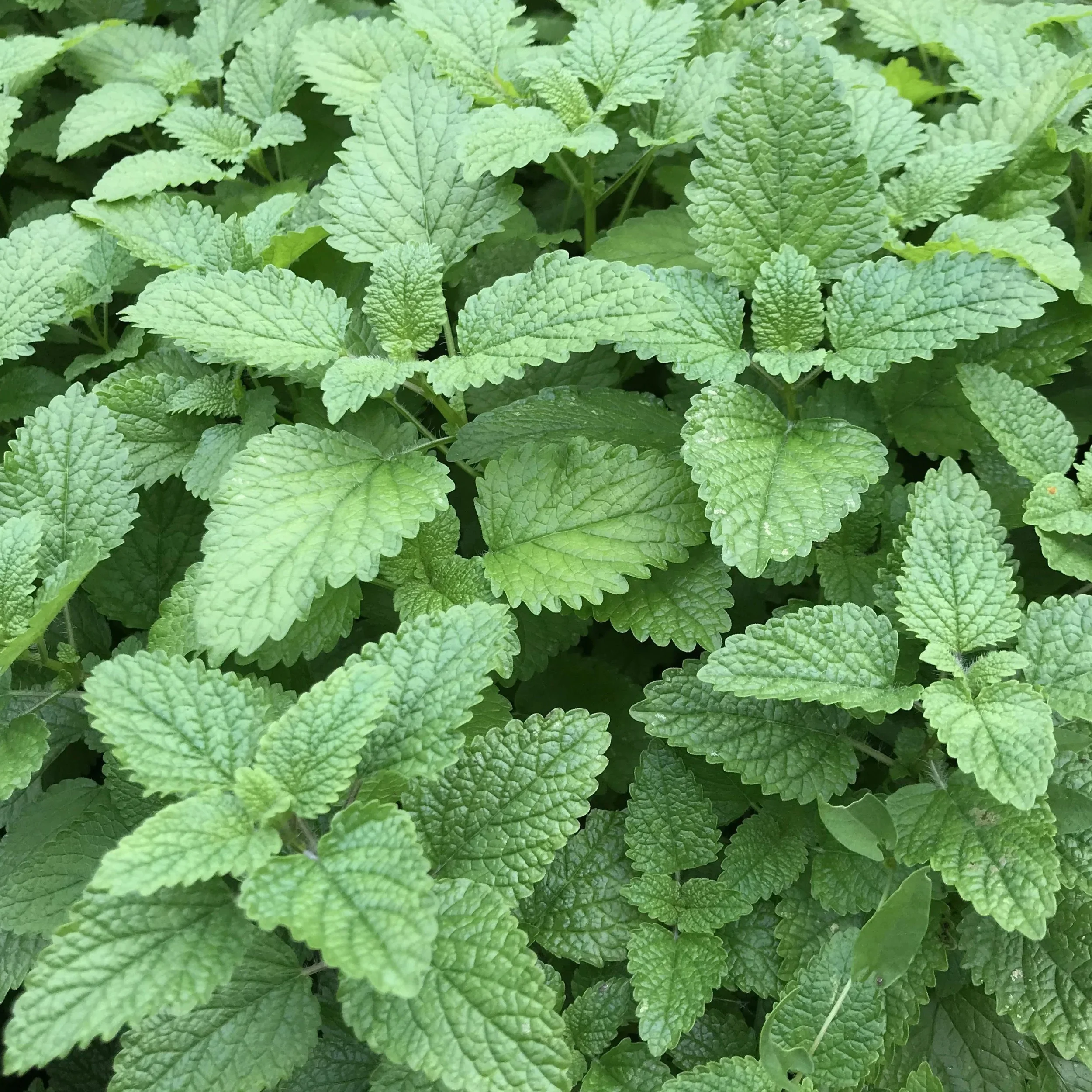
Lemon Balm (Melissa officinalis)
Some herbs seem to invite us to slow down simply by being in their presence. Lemon balm is one of those plants. Brush your fingers against its soft green leaves, and a lovely lemon fragrance rises almost immediately. It is a familiar herb in cottage gardens, traditional apothecaries, and the quiet corners of herbal history, where it has long been associated with comfort, cheerfulness, and the restoration of a weary spirit.
I've always appreciated the herbs that offer something gentle without being insignificant. In traditional Western herbalism, gentleness is not necessarily a measure of weakness. Some of our most enduring medicinal plants are valued precisely because they can be incorporated into ordinary routines and offer support during seasons when the body and nervous system seem to need a little extra care.
Lemon balm is particularly meaningful in this regard. For women navigating menopause, when disrupted sleep, digestive discomfort, emotional tension, and changing energy levels may begin to overlap, it is a plant well worth getting to know.
Getting to Know Lemon Balm
Lemon balm, botanically known as Melissa officinalis L., is a perennial herb belonging to the Lamiaceae family. Native to parts of Europe, western Asia, and the Mediterranean region, it has become widely cultivated in temperate gardens throughout the world.
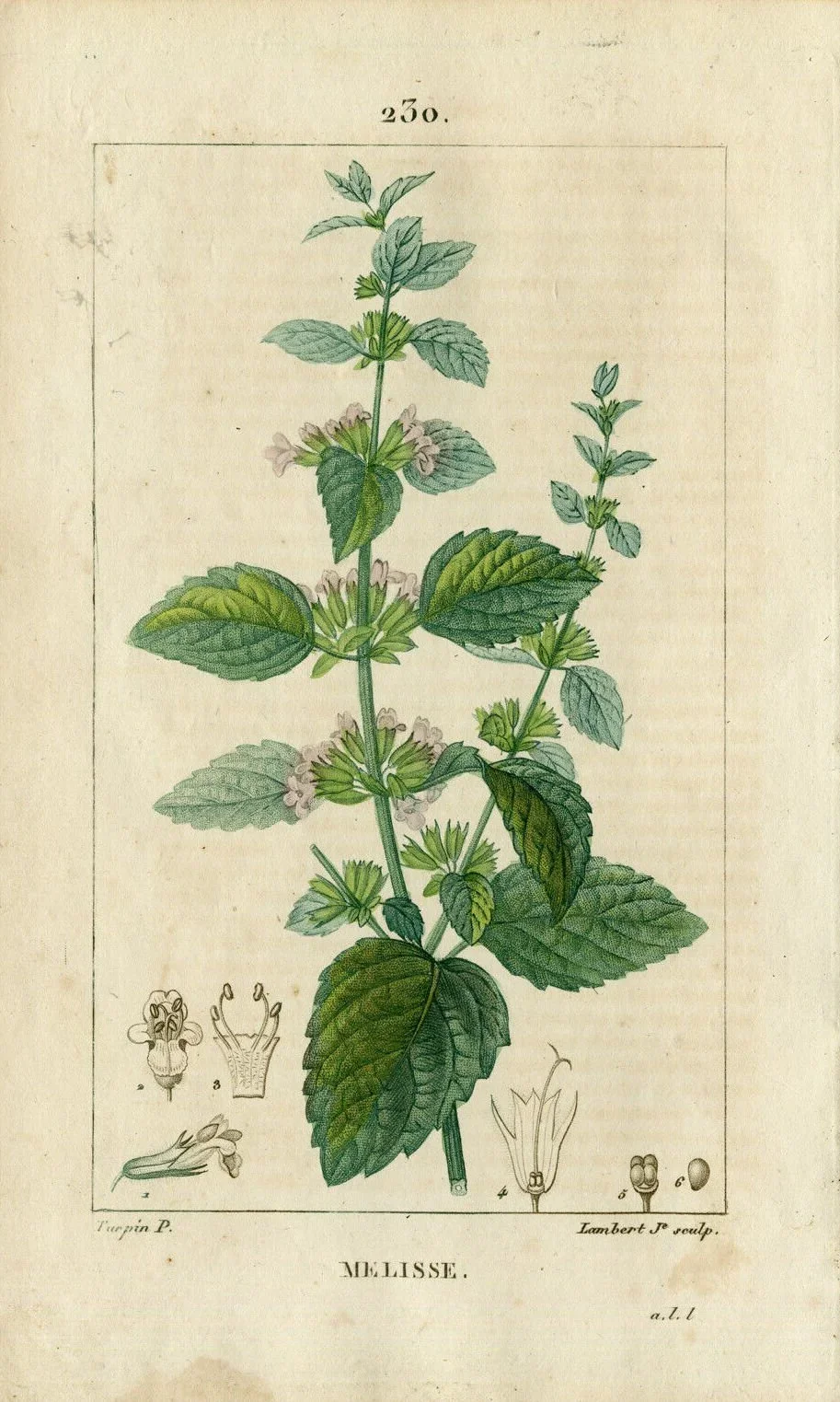
Its bright green, slightly wrinkled leaves grow on square stems, a familiar characteristic of many members of the mint family. Small white to pale yellow flowers attract bees and other pollinators. The genus name Melissa comes from the Greek word for honeybee, reflecting this long-standing association.
The leaves are the primary part used in herbal medicine, although the flowering aerial parts may also be harvested. Their pleasant fragrance comes from volatile constituents, including citral-related compounds and citronellal, whose proportions vary according to the plant and growing conditions.
Fresh lemon balm is wonderfully aromatic, but its fragrance can diminish during drying and storage. For this reason, careful harvesting, gentle drying, and protection from heat, light, and moisture are important when preparing it for herbal use.
Lemon Balm in Traditional Western Herbalism
Lemon balm has a long history in European herbal traditions. Medieval herbalists cultivated it in monastery gardens, and later writers described its use for melancholy, nervous tension, digestive discomfort, and disturbed rest.
The seventeenth-century English herbalist Nicholas Culpeper associated lemon balm with the heart and with uplifting the spirits, reflecting the traditional language and medical theories of his time.
What I find especially interesting is how consistently lemon balm appears in historical descriptions of both digestive and emotional discomfort. Traditional herbalists recognized that nervous tension and digestion often influence one another, even though their explanations differed from contemporary understandings of the nervous system and gastrointestinal function.
This relationship remains relevant today. Many women notice that stress affects their appetite, bowel habits, abdominal comfort, and ability to settle into sleep. During menopause, these experiences may become more noticeable when sleep is already disrupted or daily responsibilities feel overwhelming.
Lemon balm's traditional identity as both a nervine and a carminative makes it particularly interesting within this whole-person picture.
Understanding Lemon Balm Through Herbal Energetics
Traditional Western herbalists generally describe lemon balm as gently warming and somewhat drying, with aromatic and relaxing qualities. Its energetic classification varies among herbal traditions, and some practitioners emphasize its gently cooling effect on states of nervous agitation.
Rather than treating these descriptions as rigid rules, I find it more useful to understand what they are attempting to communicate about the plant's traditional character.
Lemon balm is aromatic and dispersing, yet also associated with relaxation. It has traditionally been selected when tension, restlessness, and digestive uneasiness occur together. Its mild astringency may also be considered within a broader assessment of tissue states.
Imagine a woman who feels physically tired but mentally unable to settle. Her digestion becomes uncomfortable during stressful periods, and she notices that her evenings are filled with racing thoughts rather than genuine rest. In traditional herbal reasoning, lemon balm may be considered because several of its historical actions correspond to this pattern.
Another woman may have similar sleep difficulties but experience profound dryness, weakness, or other concerns requiring a different strategy. Her needs cannot be determined simply by identifying insomnia or anxiety as isolated symptoms.
This is why constitutional assessment remains such an important part of traditional clinical herbalism.
Lemon Balm and the Menopausal Nervous System
Menopause can be a time of significant change in sleep quality, emotional well-being, and the body's response to stress. Hormonal fluctuations may contribute to sleep disruption, while the responsibilities and transitions of midlife can add further strain.
Lemon balm has attracted contemporary research interest for its possible effects on stress, mood, and sleep. Small human studies involving particular lemon balm extracts have reported improvements in some measures of calmness, anxiety, or sleep quality. However, these investigations have used different preparations, doses, and study designs, and many have included relatively small numbers of participants.
The findings are promising but do not establish lemon balm as a proven treatment for menopausal insomnia or anxiety.
I think this distinction is worth preserving. Lemon balm's long traditional history gives us a meaningful reason to study it, while modern evidence helps us understand where its benefits are better supported and where uncertainty remains.
Within a whole-person menopause wellness plan, lemon balm may be considered as one possible botanical support for women whose concerns include nervous tension and digestive uneasiness. It is not a substitute for addressing persistent sleep disturbances, significant mood symptoms, or other conditions requiring individualized evaluation.
The Phytochemistry of Lemon Balm
Lemon balm contains several groups of biologically active constituents, including volatile oils, phenolic acids, flavonoids, and triterpenes.
Rosmarinic acid is one of its best-studied constituents. Laboratory research has explored its antioxidant activity and possible effects on pathways involved in nervous-system signaling. Lemon balm extracts have also been investigated for interactions with gamma-aminobutyric acid, or GABA, a neurotransmitter involved in regulating neuronal activity.
These mechanisms are scientifically interesting, but laboratory findings should not be interpreted as proof of a particular clinical effect.
The volatile oil contributes to the plant's characteristic fragrance and includes compounds such as geranial, neral, and citronellal. Their concentrations can vary considerably, especially between fresh plant material, dried leaves, and concentrated essential oil.
This complexity is one reason herbal preparation matters. A cup of lemon balm tea is chemically different from a concentrated standardized extract, and findings from studies of one preparation cannot automatically be applied to another.
Traditional Preparation of Lemon Balm
Lemon balm is perhaps most familiar as an herbal infusion. Fresh or dried leaves are steeped in hot water to create a fragrant tea traditionally enjoyed for digestive comfort and relaxation.
It has also been prepared as a tincture, glycerite, and concentrated extract. In European herbal practice, lemon balm has additionally been used in topical preparations, particularly standardized products investigated for recurrent cold sores.
For a traditional home apothecary, lemon balm is an especially appealing garden plant because it grows readily, can be harvested during the growing season, and lends itself beautifully to simple preparations.
I particularly enjoy the idea of lemon balm as part of an evening restorative ritual. Preparing tea, stepping away from screens, settling into a comfortable chair, and allowing the day to become quiet can be valuable practices in their own right. The ritual does not depend entirely on the herb; it also creates space for intentional rest.
Safety and Considerations
Lemon balm is generally well tolerated in customary food and tea amounts, although medicinal extracts may have different effects and require greater care.
Some individuals experience mild gastrointestinal symptoms, headache, or drowsiness. Caution is appropriate when combining concentrated lemon balm preparations with sedating medications or other substances that affect alertness.
Laboratory and animal research has raised questions about possible effects on thyroid-related pathways, but the clinical significance for people taking thyroid medication remains uncertain. Women with thyroid disorders or taking thyroid hormones should have medicinal use reviewed rather than assuming that these findings establish either safety or harm.
There is insufficient evidence to establish the safety of medicinal doses during pregnancy and breastfeeding.
As with all herbs, accurate identification and appropriate preparation are essential.
Lemon Balm Within a Whole-Person Approach
One of the reasons I appreciate lemon balm is that it reminds us how closely our physical and emotional experiences are connected.
Digestion, sleep, stress, and emotional well-being are not separate compartments of our lives. They continually influence one another. A difficult night can affect appetite and energy the following day. Persistent stress can change digestive patterns. Physical discomfort can make it harder to rest, while inadequate rest may increase our sensitivity to discomfort.
Traditional herbalists observed these relationships through the language and concepts available to them. Today, we can explore them through both historical herbal knowledge and contemporary physiology.
At Bella Zen, I believe this interconnectedness is central to women's wellness. Botanical preparations may be one part of a thoughtful plan, alongside Mediterranean nourishment, gentle movement, restorative practices, and opportunities to cultivate a more meaningful and sustainable way of living.
Lemon balm will always hold a special place in the traditional herbal garden for me. Its cheerful fragrance, familiar leaves, and enduring history remind us that restoration need not always be complicated.
Sometimes it begins with something as simple as tending a plant, preparing a cup of tea, and allowing ourselves a few quiet moments in which nothing more is required.
Selected References and Further Reading
European Medicines Agency. European Union Herbal Monograph on Melissa officinalis L., folium.
Kennedy, D. O., et al. (2004). Attenuation of laboratory-induced stress in humans after acute administration of Melissa officinalis (lemon balm). Psychosomatic Medicine.
Culpeper, N. The Complete Herbal. Entry on Balm.
Grieve, M. A Modern Herbal. Entry on Balm.
